Showing posts with label Bolivia. Show all posts

Sunday, 2 September 2012

Isla del Sol


Aside from being central to the Incan creation myth and a sacred place for ancient and modern indigenous people, Isla del Sol also happens to be one of the most beautiful places in Bolivia. We fell in love…so much so that if Bolivia was less than a 26 hour plane ride away, I think we would have bought a beach front property to use as a winter escape. Never mind that the island is at just under 4000m, during the day the sun is hot enough to make the crystal clear water of the lake look very inviting.


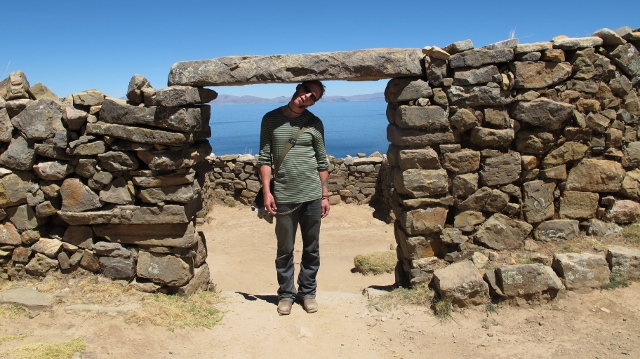
We took a boat from Copacabana to Challapampa in the north of the island- that afternoon we walked up to the northern tip to check out the Sacred Rock (where the Incans believed Viracocha created the sun god and ancestor of all Incan people) and the Incan ruins of Chincana.


We hiked back up to one of the mountain peaks for sunset, armed with a bottle of red wine (to keep the cold off) and multiple layers of clothing. We watched the sun sink over the Peruvian mainland to the west, and were then treated to an almost-full moon rising over the Cordillera de los Andes to the east.


The views of Illampu, Ancohuma and the three peaked Illimani are spectacular- even when viewed from the height of the lake they are immense and staggeringly dramatic.


The next day we set off for the southern village of Yumani- described in the guidebook as anywhere between a three and five hour hike, we were somewhat surprised (but nevertheless pleased) to arrive just over two hours later. Yumani is plastered against the side of a hill, and although not quite as magical as Challapampa, it is stunning none the less. From anywhere in the village the Cordillera looms to the east and a torturous hike to the peak gives you views over the western part of the lake.   


For Martijn I think the best part was the huge number of animals roaming free around the island- trotting along the streets in town, labouring up the steps in Yumani or playing on the beach. In addition to the hundred or so photos I took of the mountain peaks, we also have a slightly suspect number of photos of donkeys, sheep, pigs and local dogs.  I fear beastiality charges should our computer ever get seized.


Monday, 27 August 2012

Chola Wrestling in La Paz


Ok, so it turns out I was wrong. Chola wrestling is so wrong, it’s just wrong. Actually, I think it has potential, but will someone please tell me what they were thinking when they decided to make this an ALCOHOL FREE EVENT???????? WTF?


Along with all the other gringos, we had front row seats so we didn’t miss a minute of the cringingly bad amateur WWF style ‘fighting’. It was an experience, that’s for sure (though at over two hours, possibly a little more than I needed). The images should speak for themselves.

Wednesday, 22 August 2012

Jungley goodness in Madidi National Park


We hung around in Rurrenabaque for a week trying to find some other people to join us for a ten day trip to Alto Madidi, the northern section of the National Park. I’d like to say we spent the week constructively but my birthday got in the way and it turned into a bit of a bender. Luckily there is a hotel in town where you can pay BS20 to use their pool for the day, so we had somewhere to get over our hangovers in peace.


In the end we couldn’t find anyone else prepared to spend 10 days in the jungle, so we decided to take the slightly cheaper option of heading to the park’s southern section, where I first went 9 years ago with Zach. There seems to be much more tourists going into the park than there was back in 2003, but from what most operators told us the level of conservation has been stepped up a bit and there is more wildlife roaming around, and more jaguar sightings than ever. Sadly the park authorities have decided that letting a bunch of gringos loose with machetes is not sustainable practice so we couldn’t get slash-happy : ( Boo.


We spent the first and last night of the trip at the Mashaquipe main lodge, on the Rio Tuichi, an unexpected luxury compared to camping in the forest. From there we travelled by boat south to the Rio Hondo; the plan being to hike back across to the Tuichi and back to the main lodge.


I have to say the trip was easier than I had expected- conscious of the weight we had to carry, our guides Pachi & David held us back at the second camp an extra night so we could eat more and reduce the load. During the morning we’d go for hikes in the forest with Pachi- we saw monkeys (squirrel, capuchin, spider & leoncito), peccaries, capybara, caiman plus an incredible array of butterflies, caterpillars of varying radioactive shades of lurid green and yellow, armies of ants (leafcutters, fire ants-ouch, bullet ants) and other creeping crawling things (but no tarantulas-yay!!).


Because the canopy is so far above and so thick, we heard more birds than we saw, but were lucky enough to see lots of macaws, toucan, oropendulas (my favourite birdsong) and at night, a beautiful white downy owl. All throughout the trek we heard the catcalls of the sirenguerro bird- very distinctive and incredibly piercing.


On one of our nightwalks we were sitting by a waterhole when we heard something huge making its way through the jungle and enter the water. Pachi shone the torchlight and it was a tapir!! My first ever one so I was pretty thrilled! They can get up to 200kg or so, but this was a juvenile and at a guess I’d say “only” about a 120kg.

Sorry, no pics of tapir. You'll have to settle for mushrooms!

After a midday swim, lunch and a siesta under the mosquito nets we’d go fishing or go for another late afternoon hike. On our first attempt at fishing Martijn bagged a mamori within about 10 minutes; unfortunately that was the end of our good luck.


I didn’t catch anything for the entire trip, until the last day when I managed to snag two of the tiniest piranhas I have ever seen (so small they had to be thrown back. Crap).


Luckily we weren’t relying on our skills for survival- Pachi and David had better luck and caught an enormous pacu (member of the piranha family) and a catfish within seconds of each other. The pacu was big enough to feed us for lunch and dinner and he was delicious : )


After hiking across the mountain range that seperates the two rivers, we built a raft (I saw we, I mean Pachi & David) and floated downstream a few hours to our next campsite.


Martijn doing his best Survivor impression

As we set out from Rurre we were all pumped up for our first alcohol free stretch of ten days in….ummm, ok well since forever actually. But then pachamama got in the way. Every Friday and Tuesday night, guides from every company in Rurre do a ceremony for pachamama (mother earth) that involves offerings of coca, cigarettes and our old friend 96% alcohol….and what’s good enough for pachamama is good enough for us. One night I left Martijn with Pachi and David drinking and went to bed- turns out 96% booze is a great language tool; not sure what they talked about but there were at it until 2:30am. David looked rough as hell the next morning and Martijn smelt like a metho bottle (although it did mask the other nasty smells that one acquires after 8 days sweating like crazy); I think Pachi is well practiced is the art of consuming toxic liquid, he looked fine.

In addition to some new Spanish flora/fauna words to add to my vocabulary, I also learned two new Bolivian expressions on the trip:

1.       Bolear sin fumar es como bailar con su hermano (Chewing coca without smoking is like dancing with your brother; it just doesn’t feel right).

2.       Mas perdido que un ombligo de gordo (More lost than a fat man’s belly button)

Hasta pronto!!!

Sunday, 19 August 2012

La Fiesta de San Ignacio de Moxos


Yep, it’s official; we are all fiesta-ed out. We’ve had about as much processions, blaringly loud brass band music and bull riding that we can handle.


The fiesta of San Ignacio de Moxos is the biggest in Bolivia’s Beni department so while in many ways it was the same as the fiesta in Magdalena, it was definitely better organised and seemed to involve a lot less drinking than the citizens of Magdalena managed to squeeze in. Don’t get me wrong, the people of San Ignacio still got on it….just not with the blind abandon that Magdalenan’s threw themselves into party mode.


One night we went to a local bar and made friends with Seripe and Ignacio, two vaqueros (cowboys) from ranches about 6 hours north of San Ignacio. They were already pretty blind by the time we got there but were definitely still on pace- we sat with them for about an hour, maybe an hour and a half. In that time we drank 14 bottles (620ml) between us. The next night we rocked up again and saw a guy sleeping with his head on the table; after a few beers he finally woke up and it turned out to be Ignacio. He’d been there since 11am.


This time around we weren’t the only gringos in town; we hung out with an aussie couple Mitch & Sarah and an English couple Sharon & Paul and gave the Anglo-Saxon reputation as a bunch of pissheads credence.

Weirdly, although the official day of the fiesta is 31 July, all the action took place on the 30th (maybe to give people a day to get over the hangovers?). We set ourselves up early on the side of the main plaza, ordering round after round of icy cold Paceñas and watching the procession stream past us for hours.


The next day we were all feeling slightly tender. A few bottles of water helped. The midday beer helped more. With the procession still spontaneously starting up every hour or so, we continued to hang out in the plaza, people watching and talking shit, until the bull riding started late in the afternoon. We bagged ourselves a table right on the edge of the arena, in the shade, where a very happy beer lady could get to us easily. There was the usual amount of carnage as annihilated Bolivians staggered around in front of angry bulls. We filled crate after crate with empty bottles; between the six of us we managed to put away 18 bottles over the course of the afternoon. When we finally left, the beer lady invited us to come to their bar later. She knew she was onto a good thing.

Monday, 23 July 2012

Just a special touch of paradise


One day in Magdalena we hired a moped and drove an hour and a half east to the village of Bella Vista, having heard from almost everyone we met how beautiful a spot it was, and they were definitely right. The town is on the confluence of the Rio Blanco and the Rio San Martin and in the first half hour we arrived we had already seen a pod of pink river dolphins surfacing from the banks. On the drive up we spotted caiman in the shallow pools alongside the road and then on the way back a coati crossed the road right on front of us!! Wildlife!!!
Yep, that´s a dolphin. P.S. It´s REALLY hard to take photos of dolphins
We cruised along the river banks in the afternoon until we found a nice little beachy area where locals were washing their clothes and swimming. Although there are caiman and piranha in the river, the locals assured us it was perfectly safe to swim. Unlike the Australian crocodile, the South American caiman is not intent on ripping you limb from limb.
 
Right on the banks of the river we also found El Tucunare, a luxurious looking collection of thatched cabins set among beautiful gardens. It looked expensive but as we wallowed in the river and watched the dolphins swimming by we decided it might be worth splashing out…at around $40 a night it’s expensive by Bolivian standards but sooooo beautiful. The bathroom actually has a cold AND hot tap (ok, the hot tap doesn’t work, but the fact that it’s there is already a step in the right direction).
Hello gorgeous. All of that is ours.
It’s going to be tough to go back to straw mattresses and foul shared bathrooms after this little slice of heaven (woohoo!!!! TWO eighties lyrics quoted in one blog post!!!)

Sunday, 22 July 2012

Magdalena (wasn´t she the whorey one???)

From Trinidad we caught a bus north to Magdalena, a cute little town on the banks of the Rio Itonamas, with streets of fine red dust that gets stirred up with every passing moped and gets into your ears, up your nose and finds cracks and crevasses you didn’t know you had. We arrived five days before the town’s annual fiesta (La Fiesta de Santa Maria Magdalena) to find everyone already in party mode- makeshift bars set up in empty pars and paddocks, enthusiastic bands playing blaringly loud music until 5am every night, and groups of musicians roving from place to place playing a repetitive repertoire of Bolivian hits.


It’s much hotter here than it was in Trinidad- we wait until late afternoon before heading down to the river to read, and escape before the mosquitos come out in force. Aside from that our days seem to be one, long grazing session. Coffee and cheesey empanadas for breakfast, maybe a salteña mid-morning, almuerzo of chicken/beef/pork, yucca and rice for lunch, and then a late afternoon pre-dinner snack of empanadas or delicious brazier-seared meat on a stick served up outside the market, finishing up with a slight variation of the chicken/beef/pork & rive combo for dinner. Pretty much every that passes our lips is fried, salty or oily (or a combination of the three) so don’t be surprised if we’re looking a little chubby in the pics!!!

By Saturday the town had filled up nicely and there were lots of people in the plaza Saturday morning to watch the procession, with locals dressed as campesinos, livestock and Indian chiefs with beautiful headdresses made of macaw feathers. The ‘Little Miss’ and ‘Miss Magdalena’ winners paraded proudly at the front of the groups of little girls and woman- we had gone to check out the start of the competition earlier in the week with some local guys. A packed stadium had watched the girls flounce up and down in their traditional dresses (no bikini contest here).


On the Sunday drinking started early- by 9am there were already people lurching from bar to bar or staggering around the plaza. Never ones to go against the flow we bought a few cans and watched a group of drunken men try to erect a pole for the rodeo later in the day.


Over lunch we met Martin, a guy from La Paz who was in the region filming a documentary about the remaining indigenous groups that still have their own language etc. We hung out with him for the rest of the day, drinking beers and chatting to other random pissheads.


The rodeo was the big event of the day- fairly brutal I have to say, though probably most of the contestants were well enough lubricated to avoid serious injury.


The evening post-rodeo is a bit of a blur, a vague memory of eating dinner, trying to get into a dance (but being too tightass to pay the BS$50 per person to get in) and drinking more beers with Martin and his cameraman Ivan.

The next morning we had to get up at the crack of dawn to be at the bus station at 6am. Ouch.

Friday, 13 July 2012

Trinidad...but not Tobago

No, not that Trinidad. The other one- Trinidad, capital of the Beni Department of Bolivia. The day we arrived the city was completely at a standstill due to a civil strike in solidarity with the current indigenous protests against the government. Waiting for a room in a guesthouse, we spent the morning in the plaza watching the world go by. The highlight was seeing a guy carry a sloth down from his garden and put him in one of the trees in the plaza.


Today we rented a moped and set off south of the city to explore a little. A few km’s out of town we hit a toll booth with a copper who asked to see our driver’s license- I showed him the aussie one along with our passports.

Martijn is thinking of trading the Harley in
“This isn’t enough. You need an international drivers’ license”; he told me.
“Hmmm, I didn’t know, sorry. Where can we get one from?” I was aiming for a combination of ignorance and innocence.
“Back in your own country”
“Oh. Sooooo, what do we do now?” I asked.
“Now, you’re going to jail”, he replied, miming putting handcuffs on me, and then he cracked up at his joke.

He waved us off and we continued putt-putting along the highway towards Puerto Almacen, whose name as a port is perhaps a little undeserved…though bizarrely it was home to a tiny branch of the Bolivian navy!!

Yes, that´s the navy. Impressive for a country without a coastline.


We followed the road a little further until we came to a river where in lieu of a bridge there were a series of barges ferrying people, cars, buses and trucks across. Some were listing worryingly to one side but they all made it….or at least, all the ones we watched did.


As if being back in a hot & steamy climate wasn´t enough to keep us happy, there is also now a steady supply of fresh and tasty fish to eat!!! And I have to say it´s much more enjoyable drinking beer in 30 degree heat than it was at minus 5!!


After lunch we found a schmick place by Laguna Suarez where we stopped off and enjoyed nice chairs, a view unspoiled by steel/concrete/rubbish and inoffensive background music (as opposed to pumping Bolivian cheesey pop). Aesthetically pleasing, peaceful places are hard to come by in Bolivia so we are planning to head back there tomorrow : )


Sunday, 1 July 2012

Bolivia: the good, the bad & the ugly

The Good

Los Bolivianos: Bolivians from the highlands come across as proud and aloof. They are happy to chat to you if you initiate conversation but there’s rarely the hard-sell or clamour to get your attention in the markets. I like that.


The Diminutive: Bolivian Spanish sounds particularly cute and cuddly due to their love of the diminutive. A boliviano becomes a bolivianito; pan, pancito; almuerzo almorcito. I also love that everyone is either mamita or papi!


Resourcefulness: as in many poorer countries, the throw-away mentality does not exist in Bolivia. Down the road from our hostel is a small shop where an old man sits all day repairing soccer balls. People make sandals out of old car tires. The kinds of televisions put out on the nature strip for hard rubbish in Australia are brought to the electrician here and lovingly repaired.


The Bad

Rubbish: fair enough, the country probably has bigger things to worry about but waste disposal needs some serious work. As if the city centre wasn’t bad enough, on the outskirts of every village and town is a huge unchecked pile of rubbish, unceremoniously dumped by the roadside. If you’re really unlucky you’ll find yourself in the middle of a toxic cloud of smoke as plastic bags and bottles are set alight.


Driving: where do I start? Drivers in Bolivia are spectacularly bad- they don’t signal, they run red lights (all the while honking furiously to alert oncoming vehicles with right of way to get the hell out of the way), they take corners at mind boggling speed with double the regulation amount of passengers on board, they even rival Australians for drink-driving culture.


Electric Showers: sort of for the tepid (at best) water they produce; mainly for the exposed wires and constant fear of electrocution.


The Ugly

The giant public urinal: nobody in Bolivia has any qualms about dropping their pants and pissing (or worse) in the street. And not just in some discreet side street, no, for a conservative country they aren’t shy about public urination. The result is that great swathes of the city stink like piss. Nasty.


Expectoration: it’s worrying when all public buses have stickers asking people not to spit. Would they otherwise just hock one up on the bus?? Probably. Listening to people hawk, hack and hock up parts of their lungs is one of my least favourite aspects of Bolivian life.

Saturday, 30 June 2012

Hikey hikey


Thanks to a handy facebook link from a friend, we read an article in The Age about Condor Trekkers while we were still in Argentina and decided to check it out once we got to Sucre. The non-profit organisation was started by an aussie guy who went through two frustrating years of Bolivian bureaucracy before finally opening the doors to Condor Trekkers a couple of years back.  


The company runs one to four day treks in the mountains outside Sucre- we opted for the three day option since there were already a few peeps signed up. The trek starts at Chataquila, a small chapel at around 3600m, where we had breakfast as the sun came up, and then started walking down the restored Inca Trail, shedding clothes as the temperature rose (and the incline increased!).


The trail follows the River Ravelo, with beautiful views of the multi-coloured valley on both sides and the occasional herd of goats/ cows/ donkeys being coaxed along by their seemingly ancient owners. It’s quite humbling to be labouring up a hill and see a 70 year old lady with rubber sandals overtake you and beat you by several hundred metres.


We stopped for lunch and a siesta under the gum trees before beginning the more challenging half of the day’s walk- a fairly constant uphill climb to the crater of Maragua, where we would sleep. The villages inside the crater are supported by Condor Trekkers and the people were very sweetly welcoming as we dragged our asses into Irupampa late in the afternoon.


In the morning we stuffed ourselves with yummy porridge in anticipation of a gruelling walk up out of the crater. Sadly the photos below don't really do justice to the gradient....must get Martijn to work on his camera angles in order to make me look tougher.


At the top though we had amazing views of the whole crater, and even back across to Sucre through a gap in the mountains. After lunch we went to see the famous dinosaur footprints at Niñu Mayu- there are loads of similar prints in the Sucre region and these were pretty impressive I have to say!


The rest of the afternoon was spent slowing making our way down to the village of Potolo, located in a valley and big enough to warrant a small shop which sold beer. Along the way we passed a school where the kids had just finished classes and flocked around the funny group of gringos shrieking and giggling at us (they cracked up when one of the girls lifted her arms and they saw her hairy armpits!).


We arrived into Potolo around 5ish and had a beer in the plaza as a reward for a long day of walking!! Followed by a few more rewards that night….

On the way back to Sucre the next day we were treated to the usual Bolivian love ballads played at top volume. It should be clear just how bad these are when I say that when Ace of Base came on, we were all REALLY happy (even when it was played three times in a row). Happily, the last hour of the trip was a 90's megamix of b-grade hits!! I've had that Be my Lover song (la da da di da da dada) in my head since Thursday....boo : (  Click below and crank it for a quasi- Bolivian bus experience of you own!!!